Kayaking Trips in Zanzibar
The first stroke always feels heavier than it should. Salt air, quiet water, sun already starting its climb. Out there it’s just you, a paddle, and a horizon that keeps pretending to stay still. Trip comparisons showing kayaking trips in Zanzibar in the plan help, sure — but no chart really explains how calm turns to current, how mangrove shadows hide stories, how the sea changes its mind whenever it wants.
People come here thinking kayaking is exercise. It is. But mostly it’s listening. The water talks in ripples. Crabs click under roots. Fishermen wave from wooden boats that lean like they’ve known storms before you were born. Paddle slow. Zanzibar doesn’t like people who rush.
1. Start where the tide breathes
Morning is kindest. The water sits flat, almost shy. By noon, wind shows up and starts arguing with the current. If you’re new, begin at Paje or Jambiani — calm shallows, sand soft as sleep. The south coast teaches you rhythm before it tests you.
I met a guide once named Ali who refused to check the clock. He watched the tide like it was a mood. “If the ocean smiles,” he said, “we go.” We waited forty minutes. Then the sea smiled.
2. Mangrove routes: where silence moves
Paddling through mangroves near Chwaka Bay feels like sneaking into someone’s diary. Roots twist from the water like fingers reaching for old secrets. Birds shuffle above you — white, black, sometimes bright flashes you can’t name. No engines, no music, just dripping branches and your own breath.
Once, a crab fell into my kayak. Tiny thing. Stayed for half the ride. I called him the captain. He didn’t argue.
3. North coast drift
Up near Nungwi, the sea changes personality. It’s louder, bluer, wider — like someone opened a curtain. Kayaking here feels like balancing on light itself. The reef is close, fish flash under you, and sometimes a dolphin cuts through the line of horizon like punctuation.
Don’t chase them. Just float. They come when they want; they leave when they decide. That’s the rule of the ocean, not a tour schedule.
4. Gear that makes sense
You don’t need much. Sunscreen that doesn’t hurt coral. A dry bag that actually closes. Water — not in plastic. The best paddle is the one that feels ordinary in your hand. Fancy gear doesn’t beat patience.
I once forgot shoes. Ended up paddling barefoot, toes white from salt. Best mistake I ever made.
5. Paddle partners and guides
You can rent alone, sure. But local guides know more than Google. They read wind by smell. They sense storms before clouds appear. And they tell stories that never made it to books — sea spirits, lost dhows, lovers turned to coral.
One guide said the ocean listens when you whisper your wish into the paddle drip. I tried. I won’t tell you what I asked for, but it came true by sunset.
6. Respect the rhythm
Kayaking looks peaceful until you turn against the current. Then it’s argument, arm versus water. That’s when you learn humility. Rest when you need. Nobody’s keeping score.
Sometimes I stop mid-paddle just to float. Waves slap the hull. Sun hits my neck. Everything slows down enough to sound human again.
7. Hidden paths locals love
Near Michamvi, there’s a narrow creek that only opens at high tide. Palm roots dip into it, monkeys swing overhead. It closes fast, like a secret. Locals call it the “one-hour road.” You miss it, you wait a day.
Another path starts behind small villages in Kizimkazi. Fisher kids race you from the shore, shouting guesses at where you’re from. You laugh, splash, lose count of time.
8. Sunset paddles
Sunset isn’t gentle here. It burns. Gold turning orange turning blood red, then gone. The paddle drips fire into the water. Silence grows heavy enough to feel.
One evening I stopped paddling completely. Just floated. The world went still — like the island paused to breathe. A fisherman’s radio whispered an old taarab song somewhere on shore. That’s what memory sounds like.
9. Weather moods
November’s calm. April’s wild. Between them — soft chaos. Check the wind, ask the locals. They’ll tell you before your app does. Rain doesn’t ruin the trip. It paints it.
Once I paddled under rain so warm it felt like bathwater. Sky and sea blurred. Couldn’t tell where one ended. Didn’t need to.
10. Safety that doesn’t ruin freedom
Life jackets, always. Don’t argue. Tie your phone, or better — leave it behind. Bring a whistle, not headphones. And tell someone where you’re going. Ocean’s friendly but forgetful.
A traveler once ignored warnings, went out solo during wind shift. Spent the night on a sandbank with crabs. Came back laughing, sunburned, wiser.
11. Pair it with something else
Kayak in the morning, spice farm after lunch. Or paddle to a sandbank picnic — eat mangoes, swim, nap, paddle back. Kayaking fits inside other adventures like tide fits inside time. Read how kayaking trips in Zanzibar fits into Zanzibar tours if you’re planning mixed days — Safari Blue, dolphin spotting, reef snorkeling. It’s not competition; it’s rhythm.
I once combined it with a sunset dhow sail. The sailors laughed seeing me arrive by kayak. “Small boat joins big boat,” they said. We shared peanuts and stories about wind.
12. Eco side of it
No fuel, no smoke — kayaking is the cleanest hello you can give the ocean. Stay off coral, keep distance from dolphins, collect what doesn’t belong — bits of plastic, stray flip-flops. The sea gives back what you respect.
Once I picked up a water bottle mid-paddle. By the time I got back, a kid ran up with a sack full too. He said, “Race finished?” I told him he won.
13. For beginners
Balance, breathe, and don’t fight the paddle. Let the current help. Think less, float more. Every splash teaches you something different.
My first try, I turned in circles for ten minutes straight. The guide clapped like it was a dance. He said, “Now you know how to greet the sea.”
14. Couples, families, solitude
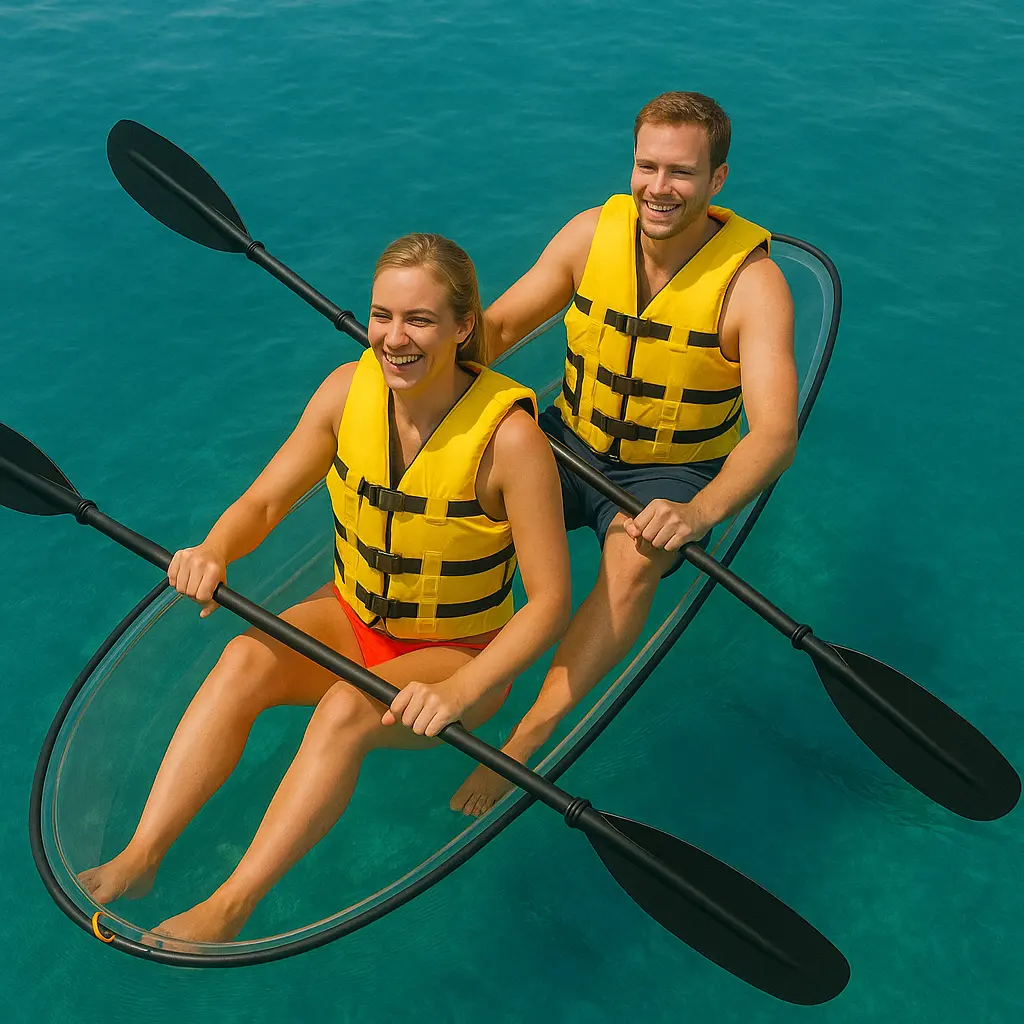
Tandem kayaks test patience — and teamwork. Families laugh more than they move. Solo paddlers go quiet, talking to the sea in their head. All three versions work.
I’ve seen honeymooners drift under one paddle, arguing softly about who steers. The ocean listened, shrugged, stayed neutral.
15. When to skip
If the wind growls, listen. Guides cancel for a reason. Pride sinks faster than kayaks. There’s always another morning.
I waited two days once — storm passing, sky gray. The third sunrise looked like forgiveness.
Final thoughts
Kayaking in Zanzibar isn’t a sport. It’s a conversation between you and a restless sea. Sometimes she’s kind, sometimes she tests you. But she always remembers honesty.
When you pull back to shore — arms sore, hair full of salt — you realize you never really left the island. You just met it from a different angle.