Cycling Tours Through Villages in Zanzibar
Browse inclusions for holidays tied to cycling tours through villages and you’ll see shiny bikes and perfect skies. Real life is dust and salt and kids yelling “jambo!” from doorways while a rooster tries to win an argument with a radio. You wobble for the first hundred meters because the seat isn’t quite right and the back brake squeals. Doesn’t matter. The road opens, palms lean in, and the island tells you to slow down without saying a word.
I rented a single-speed that had more stories than paint. Chain a little dry, bell hanging by optimism. The man at the shop smiled like he knew I’d bring it back tired and happy. “Pole pole,” he said. I nodded, pushed off, and the pedals found a rhythm my legs didn’t know they remembered. Sand, then hard pack, then a strip of tarmac hot enough to shimmer. The sea kept appearing and disappearing through the trees like it was teasing us both.
Villages wake in layers. First the sweepers: soft swish of brooms pushing yesterday off the doorstep. Then the tea stalls, steam drifting sideways, sweet black tea poured high so it foams. Finally the kids, uniforms slightly crooked, running faster than my bike on a good day. I learned quickly that riding in Zanzibar is not about distance. It’s about stopping every few minutes because someone waves, or a goat disagrees with your route, or a smell pulls you sideways toward a pan of chapati that just hit the hot plate.
Stone Town is a maze, so I started outside it. Paje first. The road to Jambiani looks flat until the wind tilts it. On the left, ocean breathing in long sentences; on the right, small shops with hand-painted signs that have been touched up so many times the letters took on personalities. “Bicycle repair—fast.” “Fresh coconuts—siku zote.” “Hair cut + dreams.” I stopped for water and came away with a story about a cousin who once cycled to Kendwa in flip-flops and arrived a legend. That’s how conversations work here. You ask for a bottle and they hand you a memory.
Low tide makes a road where there wasn’t one. Sometimes you can pedal on the firm sand, tires whispering, crabs darting like punctuation. Don’t push your luck on the coral. It looks smooth until it bites. I tried, learned, limped back up to the village path with dignity leaking out of me, and an old man with a blue cap grinned and said something kind that I translated as “you’ll do better after tea.” He was right. Tea solves many things.
Inland, the earth turns red and holds your tires like a gentle handshake. Mango trees throw shade in uneven patches. A woman balancing bananas on her head walked straighter than my front wheel would ever manage; she laughed when I rang the bell at a goat like it could read traffic rules. I learned two greetings that open every gate: “Shikamoo” to the elders, “Mambo” to everyone else. The answers come with a smile that goes straight to your legs and adds twenty percent more power for the next hill.
Hills are small, but the sun is not. It presses on you, a slow iron. I kept a cloth tucked under the seat to wipe grease off my hands and sweat off my face. Every time I stopped under a palm, someone pointed at my bottle and then at a bucket. Top-ups happened without ceremony. A boy rinsed my chain with a trickle of water and the bike thanked him louder than I did. Neighborhood maintenance crew, paid in laughs.
There was a morning in Bwejuu when the road gave up completely and turned into a suggestion. I followed laughter instead of GPS. Found a group of kids chasing a tire with a stick like it owed them money. One girl rode a tiny pink bike with one pedal missing and kept up anyway. She asked to try mine. I hesitated for exactly one second, then handed it over. She took off like it was hers from birth. The crowd cheered. When she rolled back, everyone clapped once, serious and proud, and I realized the island had decided I could stay a little longer.
Fish markets are signposted by smell long before sight. Nungwi in the late morning: boats pulled up like ribs, fishermen talking in low, satisfied voices, knives flicking glitter from scales. I leaned the bike against a post and watched an auction that moved faster than the clouds. No one minded me. A man pressed a piece of grilled octopus into my hand with the finality of a blessing. Char, lemon, a shock of salt. I ate, nodded, said “asante,” and meant it with all the muscles that hurt.
Some routes are quiet enough to hear your chain think. Matemwe to Kiwengwa slides through small clearings where women pound coconut and every swing of the pestle sounds like a heartbeat. The road throws you a new surface every minute: ripples, dust, polished hardpack, a surprise puddle that holds the sky. I kept checking the shadow of my front wheel just to prove I was moving forward. It felt like riding inside a story that didn’t care about chapters.
Midday heat wants you stopped. A shopkeeper in Jambiani waved me into the shade of a blue wall and pushed a plate of vitumbua across the counter. Rice cakes, warm, a little sweet, gone too fast. We argued politely about football teams that neither of us had watched in weeks. He asked where I was riding. I said “south, maybe.” He nodded like he’d known all along. Directions here are more like blessings than maps. “Keep the ocean on your left,” he said, “unless it’s on your right.” Perfect advice.
Not every hour is a postcard. I blew a tube outside Makunduchi when a thorn calculated its life purpose at my expense. Before I even flipped the bike, two men had appeared with a bowl of water and that little patch kit every island seems to own. One crouched like a surgeon, one told a joke that didn’t need translation. Ten minutes later we were holding the wheel in the sun to judge our own brilliance. I paid too much, they took too little, and my chain sang a happier song for the next twenty kilometers.
Forests breathe different. Jozani’s road sits in a tunnel of green that keeps secrets. Dappled light, a smell like wet rope and fresh leaves, bird calls you can’t place. I slowed to walking speed without deciding to. Red colobus monkeys looked at me with the level judgment usually reserved for movie critics. When the wind moved, the whole canopy answered like it was one living thing. The bike felt small there, and I liked that feeling.
Food is not a stop; it’s an orbit. Chapati in Paje that stuck to the edges of my fingers. A bowl of coconut beans in Kizimkazi so gentle it made the road softer after. Sugarcane juice in Stone Town poured into a glass that looked like it had been telling the same story for years. I learned to keep small coins in the front pocket, and a napkin under the saddle. Also learned that if you say “nitashukuru sana” with a tired smile, you will never be hungry for long.
The sea keeps you honest. On the ride from Kendwa toward Mkokotoni, boats being carved from trees sat like sleeping animals. Men hammered quietly, salt hung in the air, and the wood smelled warm even before the sun touched it. I set the bike down and watched a long, slow cut that seemed to take the shape of a future wave. One of them pointed at my tires, nodded approval, then at my helmet, laughed softly, like it was a hat for somewhere colder. Fair point.
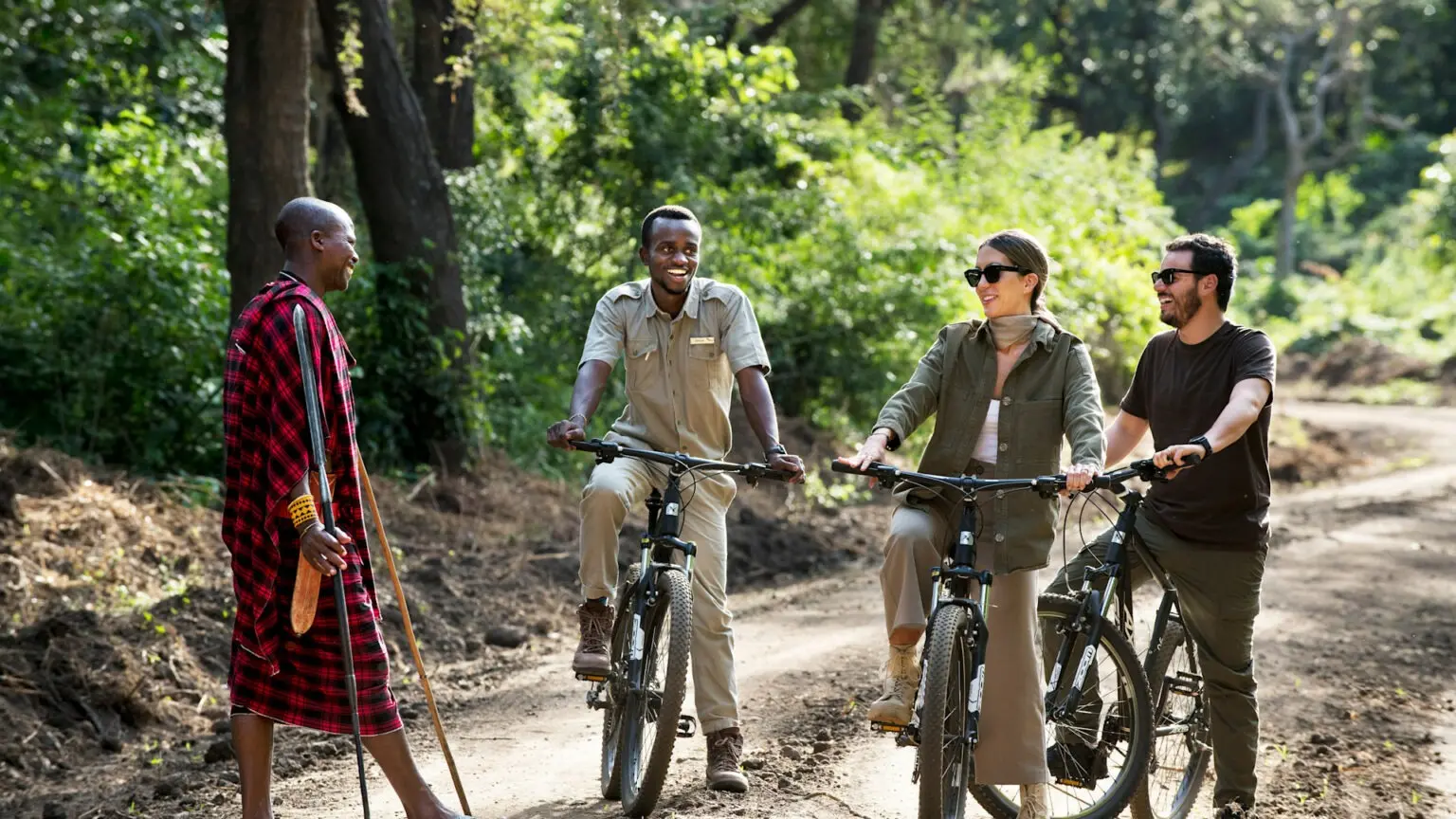
The complete tours hub includes cycling tours through villages but the page won’t tell you the small things: the way sandals flick dust onto your calves and make cheerful stripes, how dogs choose to ignore you unless you talk to them first, how the path always looks longer right before it gives you a view worth stopping for. Guides will mention distances and refreshments; they won’t mention the silence between palm shadows that feels like a gift you’re supposed to open slowly.
On one afternoon the sky decided to practice being the ocean. Rain came sideways. I ducked under a zinc roof with three strangers and a bucket that failed its life mission. We ate mandazi from greasy paper, watched water jump off the road, and cheered when two boys tried to outrun a puddle and failed with joy. The woman who ran the stall handed me a dry rag like she knew me. When the rain shrugged and left, the world smelled rinsed and the bike rolled easier, like the bearings had been forgiven.
Etiquette fits on a handlebar. Greet first. Point where you’re going with your whole hand, not a finger. Slow near schools. Give goats space equal to trucks because goats have more confidence. Wave at the old men who play bao under the tree—if they wave back, you’re part of the day; if they don’t, you were still politely present. If you hear the call to prayer and a path narrows by a mosque, dismount; it takes ten extra seconds and buys you a pocket of respect that lasts all afternoon.
Pace is personal. Some mornings I chased every horizon because the wind made promises. Other days I sat on a step and fixed a squeak that wasn’t really a squeak, just an excuse to listen to someone’s grandmother tell me which road used to be a river. She pointed with the calm authority of a cartographer and offered me a mango with the absolute certainty that I hadn’t eaten enough. She was correct.
Tour guides add structure if you want it. A good one knows which paths stay firm after rain, which shop has cold soda even when the power blinks, which uncle will loan a pump without negotiating a treaty. They translate jokes that hinge on a single Swahili verb and save you from the kind of shortcut that lives only to regret travelers. A great guide lets the plan breathe: if a wedding passes by, you stop; if someone beats drums in a courtyard, you listen; if a fisherman offers a taste, you accept.
The people you notice last become the ones you remember first. A girl with a yellow ribbon who paced me for two streets, carefully serious, then burst into a grin so huge it made me wobble. The tailor outside Paje who stitched a pocket on my bag while it still hung from my shoulder. The man selling pineapples with a knife that became a compass—pointing, slicing, pointing again. Each of them a mile marker that only exists in memory.
And then there’s evening. Light softens and the road forgives your mistakes. Smoke from cooking fires finds you; it always does. You pedal slower without admitting it. A football hits the path, rolls under your wheel, and a boy sprints after it with the urgency of the last minute of a final you never saw. Someone shouts an apology that sounds like laughter. You wave like you understand every word, because by now you kind of do.
Night riding is possible but not proud. If it finds you, keep to the edges where the sand is honest and the dogs know your shape. Use your light. Accept a ride if someone you trust offers one. The island is gentle; darkness just asks for more attention than daylight. I only rode once under a full moon and everything felt taller, even me.
Another day, north road. Tanga breeze mood even though you’re still on Unguja. The path climbs the smallest hill and gifts you a view that throws the ocean too close to be believed. I stopped talking to myself. Just breathed. The bike leaned against me like a friend who doesn’t ask questions. That’s the thing about two wheels here: they take you to spaces where your head stops clattering and your body handles the conversation.
Practical things people forget: sunscreen lies about clouds. Water is lighter in your belly than on your rack. Zip ties weigh nothing and fix everything. A bandana saves your day three different ways. Keep a copy of your ID tucked deep. A smile buys more room than a horn ever will. And never underestimate a shaded bench—half the island’s best directions start on one.
I passed a wedding procession near Kizimkazi—music that moved the air itself, dresses like bright weather. The road disappeared under feet and joy. I dismounted, pushed beside them, and a woman in green told me to stop being shy and dance. I am not a dancer. I danced anyway because resistance would have been an insult to gravity. The chain clicked approval when we rolled on. I swear it did.
Somewhere after that, I rode through a stretch where the world went quiet. No houses, just palms and a sky practicing blue. I thought of every place I had hurried through in my life and how this road would not allow it. A hawk drew a line above me and erased it. The front tire stitched the day together one small contact patch at a time. I decided to keep this moment, like you pocket a shell you know will crumble and keep it anyway.
Back in the village, evening again. Bao boards closed, last tea poured, a radio reporting something important to someone. I returned the bike to the same smile that had rented it to me. He squeezed the tires like a doctor, tapped the bell and it pretended to work. “Kesho tena?” he asked. Tomorrow again? I said yes out loud before my legs had a vote.
If you’re choosing a cycling tour, ask fewer questions about speed and more about stops. Who will you meet? Which kitchen serves snacks because the guide’s aunt lives nearby and refuses to let people leave unfed? Is there a forest tunnel on the route? A repair stand that also sells stories? The best tours here know the island runs on favors and greetings and time that stretches when you’re kind.
I used to think travel was about what you saw. It’s not. It’s what you move through and what moves through you. A village road with a soft shoulder. A wave that doesn’t stop trying to touch the same piece of shore. A child shouting your name wrong like you’re famous. The slow scrape of a kickstand. Your breath coming back after a hill that didn’t look like one from far away.
Cycling here will not make you faster. It will make you lighter. You will carry home fewer things and more moments that don’t fit into sentences. You will sleep hard and wake early and measure days by the dust on your shins. And you will, if the island is in the mood, forget the exact reason you came because the reasons keep multiplying and none of them require a caption.
The road out of any village is a promise. The road back in is a welcome. Between them, your tires write a thin story across the island that disappears the second the wind wants it to—but it stays on you. That’s enough.