Spice Farm Tours Explained
You don’t just walk into a spice farm, you kind of stumble into it. Dust on the shoes, kids running past, a rooster yelling somewhere. The smell hits before you even notice the trees — cinnamon, clove, pepper, all mixed like someone’s kitchen got left open. Nothing looks staged. The soil’s damp, a bit messy, and every leaf seems to have a story if the guide bothers to stop and pull it down for you.
For visitors, these tours feel like time travel. You’re standing in the same kind of fields that made Zanzibar famous across oceans. Ships once came here loaded with sailors desperate to carry spices back to Europe, India, Arabia. That history didn’t fade; it just transformed. Now, instead of trading at ports, it’s the farmers and guides who walk you through the stories. And when you sign up to explore packages connected with spice farm tours explained, you realize it’s not just about learning which spice is which — it’s about understanding how this island grew its identity.
The First Steps on a Spice Farm
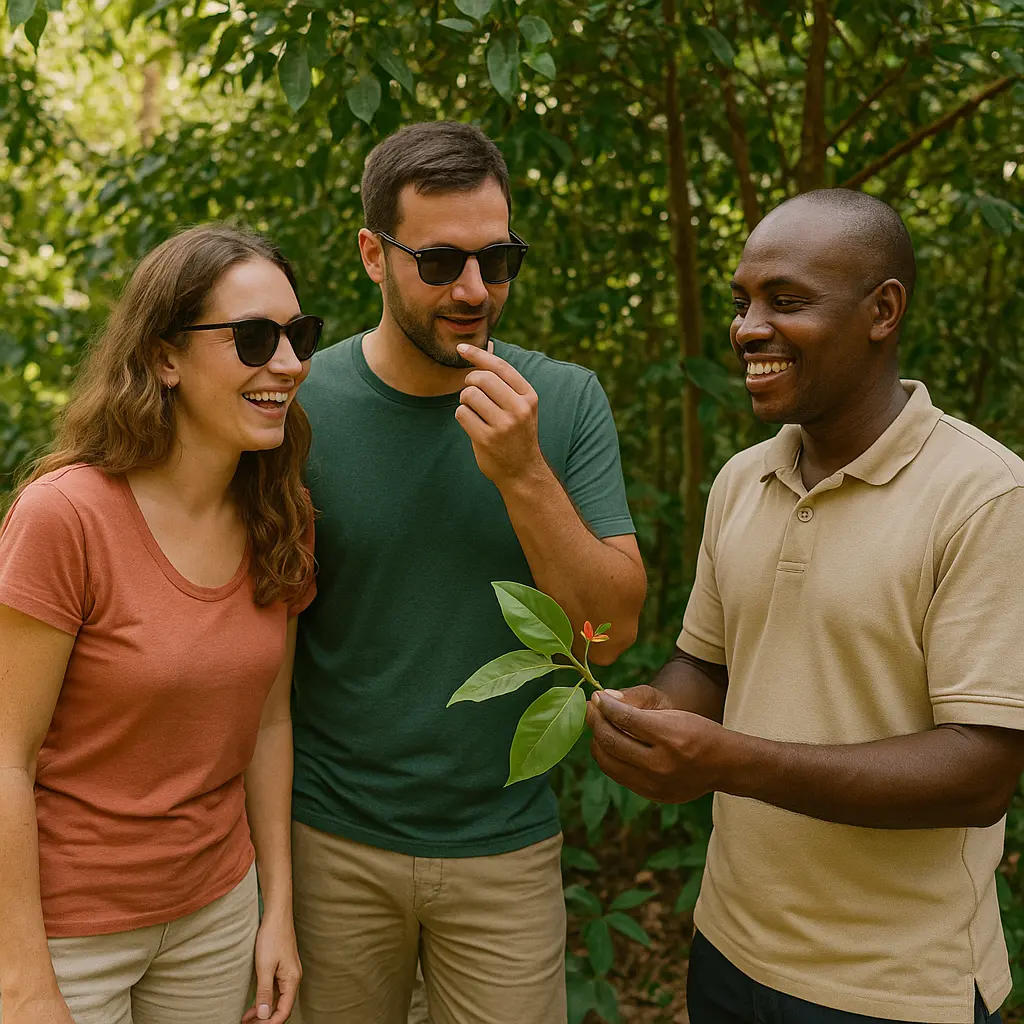
Most tours begin at a dusty road. A few minutes later, you’re under thick trees. The guide plucks something from a branch, crushes it in his hand, and pushes it toward you. “Smell.” It’s lemon grass, sharp and clean. A few steps later it’s clove, raw and fiery. Someone else breaks a stick of cinnamon, and suddenly the air changes again, warmer and almost sweet. This is not a passive experience; it’s sensory overload.
Children sometimes follow, curious about visitors. Farmers cut fruit on the spot — papaya, mango, coconut — all mixed into the rhythm of the tour. Some guides weave small hats or rings out of palm leaves as you walk, part of the fun, part of the improvisation that keeps every tour slightly different.
Why Spices Still Matter
It’s easy to think spices are just condiments. Tiny jars on your shelf. But in Zanzibar, they were wealth, power, and survival. Cloves, nutmeg, cardamom — they were once more valuable than gold. Empires fought over them. Sultans grew rich. Traders risked storms to haul sacks of cloves across the sea. Even today, cloves are still a major export for the island. The farms you walk through aren’t showpieces; they’re part of the economy. Families live from these trees.
That’s why these tours hit differently. They’re not fake setups for tourists; they’re an open door to a life that still feeds people. The guide is not just performing — he’s usually a farmer himself, or someone who grew up in the village nearby.
Tasting the Island
The part everyone remembers is the tasting. Turmeric root crushed into your palm, staining it yellow. Ginger sliced raw and hot on your tongue. Cloves chewed until your mouth goes numb. Some people cough, some laugh, some spit it out. The point isn’t comfort, it’s connection. You realize the powder in your kitchen has a face, a tree, a soil.
At the end, it usually comes together in a kind of fruit buffet. Pineapples carved in spirals, bananas cut straight from the bunch, coconuts hacked open with a machete so you drink the water straight from the shell. It’s chaotic, messy, sometimes sticky — but it’s the closing chapter of the walk.
Storytelling and History
Guides love stories. They talk about the Arabs who came centuries ago, about the sultans, about colonial powers who wanted control of the spice routes. They point to trees that outlived wars and droughts. You’ll hear how a single clove tree can live for decades, producing crop after crop. Some guides add jokes, others lean heavy on facts, but either way the walk becomes more than smelling leaves. It becomes a thread tying you to the Indian Ocean world.
What to Expect on Different Farms
Not all farms are the same. Some are smaller, run by one or two families. Others are larger and attract buses full of tourists. The smaller ones usually feel more personal — fewer rehearsed speeches, more honest conversation. Bigger farms often have better organization, clearer paths, maybe even small shops selling oils and soaps made from the spices. Both have value, but the energy shifts. On small farms you might end up sitting with the farmer’s kids, tasting food cooked in their yard. On big farms, you might get polished presentations with a crowd.
Prices and Packages
Most spice farm tours are not expensive by global standards. Prices jump around. Book it through a hotel and it’s usually higher. A farmer might offer cheaper, but you sort out the ride yourself. Some guys throw in transport from Stone Town, others don’t. One tour might end with cooking food in someone’s yard, another bundles it with Jozani or even Prison Island. It really depends who you ask that day.
The trick is to ask what’s included. Sometimes lunch is part of the deal, sometimes not. Some tours stop for shopping at the end, where oils, soaps, and spices are sold. Buying is optional, but many travelers enjoy taking something back home. The key is clarity — know if your guide fee also covers farm entrance, fruits, and transport.
The Social Side
Spice tours are also about people. You meet guides who’ve been doing this for decades. You meet children who walk along out of curiosity. You meet other travelers sweating under the same sun, all holding leaves in their hands trying to guess the smell. It’s communal. Even if you arrive alone, you leave having shared jokes and coughs with strangers.
The Island Tours Connection
For many itineraries, spice farm tours are combined with other highlights. A morning walk through the farm, an afternoon wandering Stone Town. Sometimes spice farms are added to longer full-day tours — Jozani Forest for monkeys, then a spice farm, then a late lunch. It’s a flexible part of the island’s tourism system. Travelers looking for variety often see spice farm tours explained listed in the island tours section when they’re choosing what to book. It’s rarely the only activity; it’s usually part of a blend. That’s what keeps it popular.
What You Learn Beyond Spices
Spice farms aren’t only about the plants. You also get a window into rural Zanzibar life. The houses near the farms, the way farmers cook, how water is carried, how kids play in the dust. It’s not curated for visitors, it’s just there, part of the scene. Some travelers say this was more valuable than learning the difference between cardamom and nutmeg. You see how people really live outside resorts and towns.
Etiquette and Respect
There’s an unspoken rule when visiting: respect the place. Don’t mock the guide’s accent, don’t complain about the heat, don’t throw away fruit casually. These farms are homes. A little kindness goes a long way. Bring some small cash for tips. Buy something if you can, even if it’s just a small bag of cloves. It shows appreciation for the effort behind the tour.
Spice Farm Tours at Different Times of Year
The experience shifts with seasons. In the rainy months, paths are muddy and trees are greener. In the dry season, the air feels heavier with dust and the smell of dried clove is stronger. Some spices bloom in certain months — clove harvesting season brings a whole different buzz, with farmers high up in trees collecting the buds. If you can, ask your guide what’s in season before you go. It shapes what you’ll see and taste.
Cooking Lessons and Extensions
Some packages add cooking. After the walk, you go into a small kitchen, sometimes just a covered patio with a few stoves. Local women or men show how to cook pilau rice, coconut curries, grilled fish spiced with masala. It’s hands-on, not staged. You chop, stir, taste. It can feel like a family gathering more than a class. By the end, you eat what you cooked together, and the spices suddenly make more sense.
Personal Stories from Travelers
Every traveler has a different memory. Some laugh about chewing clove and regretting it for hours. Some talk about how turmeric stained their clothes. Others remember the taste of fresh coconut water as the highlight. Spice tours are not luxury; they’re earthy, hot, sometimes tiring. But they leave an imprint. Few people forget the smell of cinnamon bark snapped fresh in their hands.
Why You Shouldn’t Skip It
If you visit Zanzibar only for beaches, you miss a layer. Spice farms connect the island’s history, economy, and daily life in one walk. They’re affordable, easy to fit into a day, and give stories you’ll tell long after. It’s not glamorous, but it’s grounding. That’s why nearly every guidebook still recommends them, and why most itineraries squeeze them in.
Final Thoughts
Spice farm tours are simple but deep. You walk, you smell, you taste, you listen. That’s it. Yet, it’s enough to make you rethink your kitchen back home. You realize every clove you drop into tea once had to be picked by hand under a tropical sun. Every stick of cinnamon was bark peeled off a living tree. These are not anonymous ingredients; they’re stories. And that’s what makes spice farm tours worth explaining.