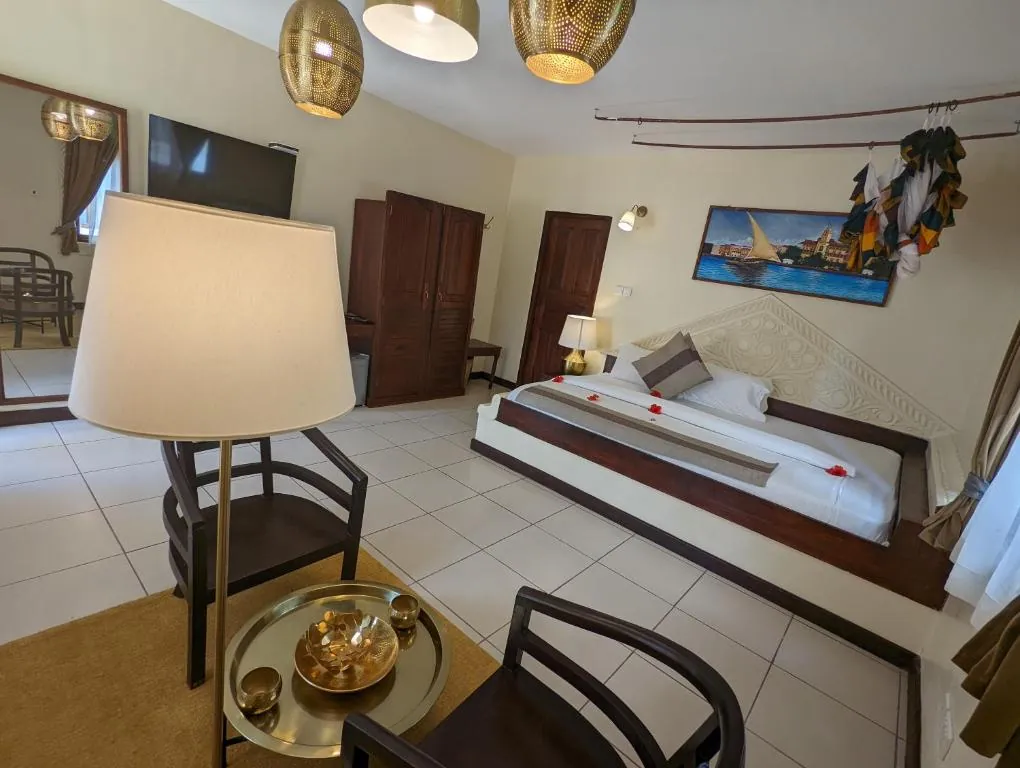
Makunduchi Traditional-Style Lodges
You don’t find Makunduchi on accident. You reach it slow — dust rising, the road curling through palm trees and quiet air. Holiday inclusions tied to Makunduchi traditional-style lodges stays show up on a map, but the feeling here never fits inside an itinerary. This corner of Zanzibar breathes at its own speed. Pole pole, like they say — slowly, slowly. You come in rushing, you leave walking softer.
First thing that hits you is silence, but not the empty kind. It’s the hum of the wind, someone sweeping outside, a rooster that doesn’t know time. The lodges here don’t shout “luxury.” They whisper stories. The walls here are coral stone, rough to the touch, cool even in heat. Palm leaves cover the roof, whisper when the wind passes. The bed creaks — old wood, still strong. You catch the smell of coconut oil somewhere before the sea shows itself. Someone somewhere is frying samaki, fish caught that morning.
Rooms with a Past
The rooms in Makunduchi traditional lodges don’t care for symmetry. One window’s lower than the other. A mosquito net droops like it’s been guarding love stories for years. But you sleep better here. Maybe it’s the air — thick with salt, spice, and stillness. Maybe it’s how the fan spins lazy, like it knows there’s no rush to cool anyone down.
In the mornings, sunlight leaks through cracks in the wooden shutters. You hear laughter outside before you open your eyes. Mama Rehema, the lodge cook, is already shouting “chai iko tayari!” — tea is ready. She pours it from a dented pot, hot and sweet with cardamom. If you sit quiet long enough, she tells you stories about when Makunduchi was smaller, slower, softer.
The Village Around You
You don’t really stay *in* the lodge — you live *with* the village. The locals walk past, greet you with “mambo!” or “karibu tena,” and somehow you start to recognize faces by day two. Down the road, kids play football with a coconut husk. Goats wander into courtyards like they own them. Everyone waves. No one’s selling anything.
Evening comes with drums again, from somewhere past the trees. Could be a wedding, could be kids practicing. Hard to tell. Smoke drifts over, mixed with rain and roasted corn. You don’t speak. You just stay there, half-still, like you belong for a second.
The Lodge Design — Simple, Honest, and Zanzibar True
The builders don’t use blueprints here. They use memory. Coral stones cut by hand, palm leaves woven tight, wood polished with coconut oil until it shines in the sun. The ceilings are high, not for looks but for breeze. The doors heavy, carved with stories about waves and spirits. Each room feels like it knows something you don’t — maybe about patience, maybe about staying still.
There’s no sharp separation between inside and outside. Lizards run across walls, geckos make tiny chirps at night. You’ll find sand between your toes even when you haven’t gone to the beach. But it doesn’t bother you anymore. That’s what Makunduchi does — makes you forget what comfort is supposed to look like, and lets you feel what peace really is.
Food That Feels Like Family
You don’t order here — you just eat what’s cooking. Coconut rice, grilled tuna, chapati warm enough to burn your fingertips. Mama Rehema serves it with a smile that says, “Eat more, mgeni.” Guest or not, you’re family now.
Lunch smells like home even if you’ve never been here before. Someone’s peeling mangoes, another chopping green banana for stew. The table’s not even level, but everyone shares from the same plate. You don’t check your phone. You don’t need to.
Lanterns come on one by one, not all at once. The light’s soft, yellow, moves when the wind sneaks in. People still laughing somewhere near the kitchen, crickets joining in without rhythm. You sit back, and for a second, everything just feels right — not quiet, not loud, just there.
Makunduchi Evenings — The Slow Fade
Evenings stretch long here. You sit outside your room, drink ginger tea, watch the sky shift from orange to violet to dark. No neon lights, no TV noise. Just stars. The night air carries the sound of people talking far away — soft voices, maybe stories, maybe prayers.
Someone’s radio plays taarab — that old island sound, half Arab, half African, all emotion. You don’t understand every word, but you feel every note. A child laughs in the distance. Someone’s frying cassava again. It smells like evening and memory mixed together.
Why Makunduchi Lodges Feel Different
It’s not just about design — it’s about rhythm. The world outside runs, this place walks. Here, mornings have meaning. Afternoons ask you to rest. Nights remind you to listen. Nobody performs island life for you; they just live it. And you, if you’re smart, learn to match that pace.
The owners will tell you they built the lodges the old way because it “breathes better.” You don’t believe them until you wake up one night and realize — even the air feels alive. The ocean’s close enough to whisper but far enough to stay quiet. You sleep deep, the kind that city people forget exists.
Makunduchi Traditional-Style Lodges Is Part of the Wider Hotels Coverage
Makunduchi traditional-style lodges is part of the wider hotels coverage — but this side of the island doesn’t play by the same rules. While Nungwi and Kendwa chase nightlife, Makunduchi holds on to heartbeats and hammocks. You wake up to roosters, not playlists. You learn that peace is cheaper than cocktails. You realize how much noise you carry when the world finally goes quiet.
The lodges here don’t compete. They coexist. One run by a local fisherman’s family, another by a teacher who decided to build rooms instead of moving to town. Every lodge has a story — not written, but lived.
Things That Stick With You
The sound of palm leaves tapping the roof when wind blows. The way the sand cools after sunset. The smell of charcoal and rain mixing before dinner. How the stars look closer here, like you could climb a coconut tree and touch them.
You might forget the lodge name, but not how it made you feel — unhurried, grounded, a little more human. That’s the real souvenir.
Local Encounters That Make It Real
You meet a fisherman named Saidi, barefoot, skin darkened by the sun. He laughs when you ask about his boat. “She leaks, but she’s loyal,” he says. He invites you for chai near the beach. The cup’s cracked, the tea sweet, the view endless. You talk about weather, family, and how sea and life are pretty much the same — both generous and moody.
Later, kids follow you around yelling “Jambo!” and posing for photos they’ll never see. A boy offers you a shell and says, “For luck.” You take it, smile, and realize it’s the only thing you’ll actually bring home.
When the Power Goes Out (And It Will)
The generator hums once, then quits. The lights blink, go dark. Nobody panics. Someone lights a kerosene lamp. The air thickens with laughter and candle smoke. You hear someone say, “Zanzibar haiwezi haraka” — Zanzibar doesn’t hurry. Everyone keeps eating, talking, existing. You learn to breathe slower.
That’s the charm — even chaos comes gentle here.
Makunduchi Mornings — The Quiet Kind
Wake up early and you’ll hear it — waves crashing somewhere far, roosters yelling closer. The sun slides up slow behind the palms. The air smells clean, new, forgiving. You step outside barefoot, the sand cool, dew still clinging to grass. Someone’s already boiling tea. Someone else is humming.
You breathe in and realize: this place doesn’t need to impress you. It just reminds you how to exist without pretending.
Leaving Makunduchi
You pack slow. There’s no hurry. Mama Rehema hugs you like family, slips a banana into your bag “for the road.” Someone shouts “Safari njema!” — safe journey — and waves until you’re gone.
The road out feels longer than the one in. Maybe it’s the weight of leaving peace behind. You promise to return, though no one asked. And you mean it.
Somewhere halfway back to town, you still smell coconut and charcoal. That’s how Makunduchi follows you — quietly, patiently, like it knows you’ll miss it.